 Wikimedia Commons
CultureUnited StatesLiving tradition
American Folklore
US regional myths, folk heroes, cryptids, and legendary places with deep cultural roots.
American folklore is a living tradition shaped by waves of immigration, frontier experience, and regional identity. It is not one tradition but many, braided together: Appalachian mountain lore carried from Scots-Irish settlers and mixed with Cherokee and African American influences; Southern Gothic storytelling rooted in the trauma and memory of slavery and the Civil War; frontier tall tales generated by an expanding culture that needed myths to match the scale of the land it was consuming.
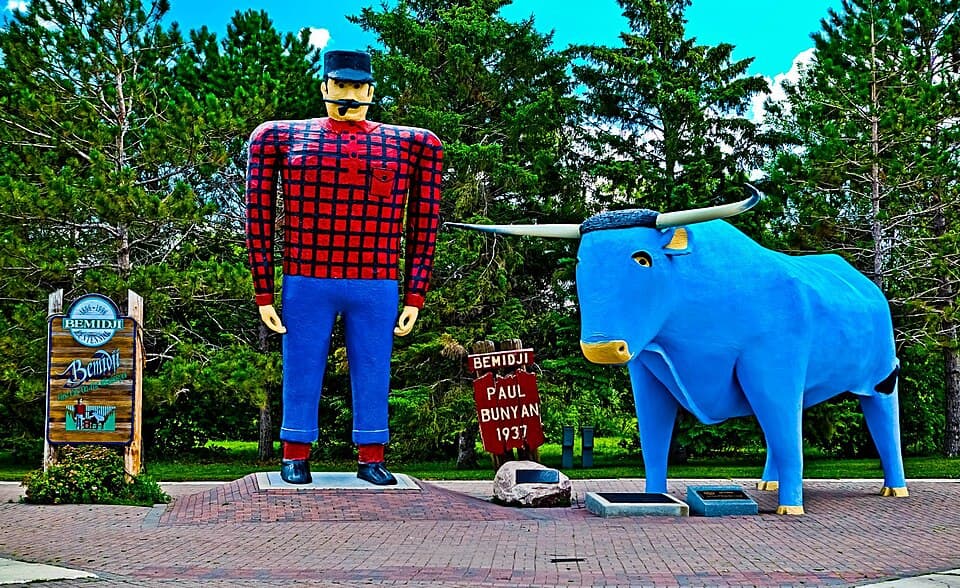
The tall tale is a distinctly American form — hyperbolic, comic, and quietly serious. Paul Bunyan clearing forests with a single swing, Pecos Bill lassoing a tornado, John Henry driving steel against a machine until his heart burst. These stories process real anxieties: industrialization, the replacement of human labor, the speed of change. They transform that anxiety into something heroic and laughable at once. Many originated as oral stories among specific working communities — lumberjacks, railroad crews, rivermen — before being collected and commercialized.
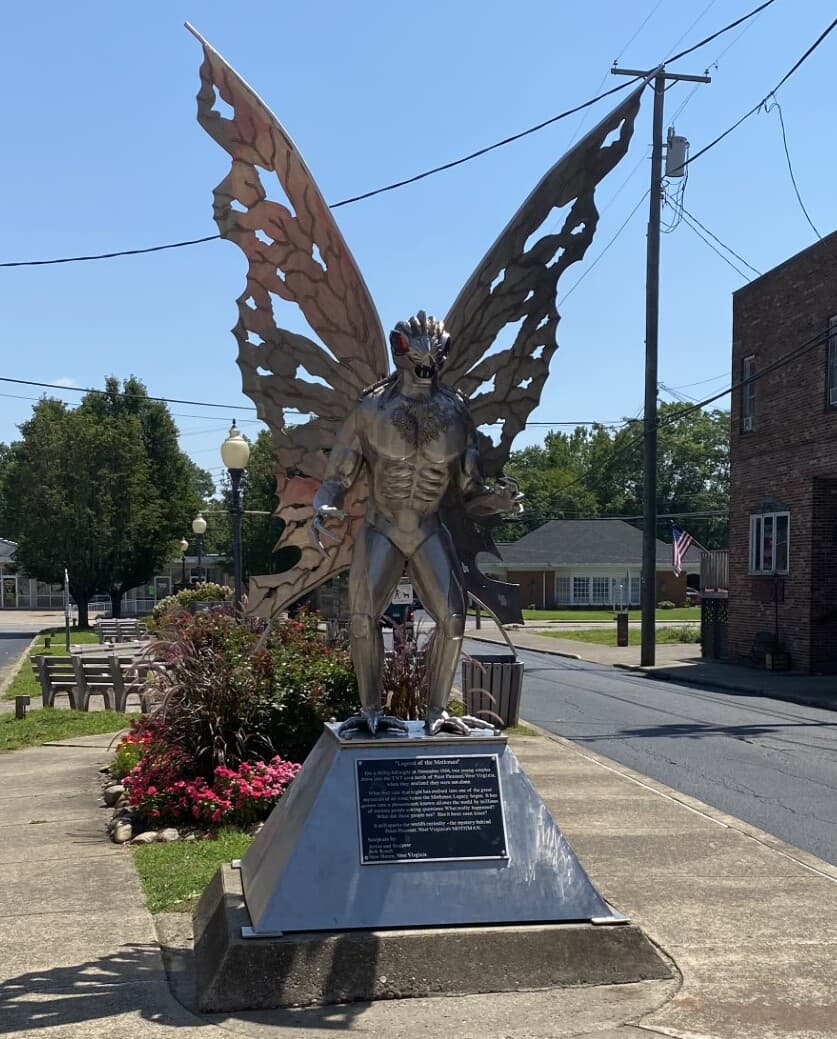
Cryptid traditions are inseparable from the American landscape. Bigfoot in the Pacific Northwest, the Mothman of Point Pleasant, the Jersey Devil of the Pine Barrens, the Flatwoods Monster of West Virginia — each cryptid is tied to a specific region, a specific ecology, and often a specific moment of cultural stress. The Mothman sightings of 1966–67 preceded the Silver Bridge collapse that killed 46 people; the connection, coincidental or not, became part of the legend.
Folklore maps landscape and makes it legible. Haunted crossroads, cursed mountains, rivers that take a life every seven years — these are ways of encoding local knowledge, warning, and history into story. The landscape shapes the folklore, and the folklore shapes how communities understand the landscape they live in.
21 entries mapped
 Wikimedia Commons
American Folklore
Mothman Bridge
The Silver Bridge collapse and the Mothman sightings that preceded it
Charleston, WV (55 miles southeast), United States
 Wikimedia Commons
American Folklore
Devils Tower
The igneous monolith sacred to over 20 tribal nations, known to the Lakota as Mato Tipila — Bear Lodge
Sundance, WY (28 miles northwest), United States
 Wikimedia Commons
American Folklore
Sleepy Hollow
The Dutch colonial village where Washington Irving's Headless Horseman rides — and where the real history is stranger than the fiction
New York City (30 miles south via Metro-North), United States
 Wikimedia Commons
American Folklore
Roanoke Island
The colony that vanished in 1590, leaving only the word CROATOAN carved into a post — America's oldest unsolved mystery
Nags Head, NC (10 miles east), United States
 Wikimedia Commons
American Folklore
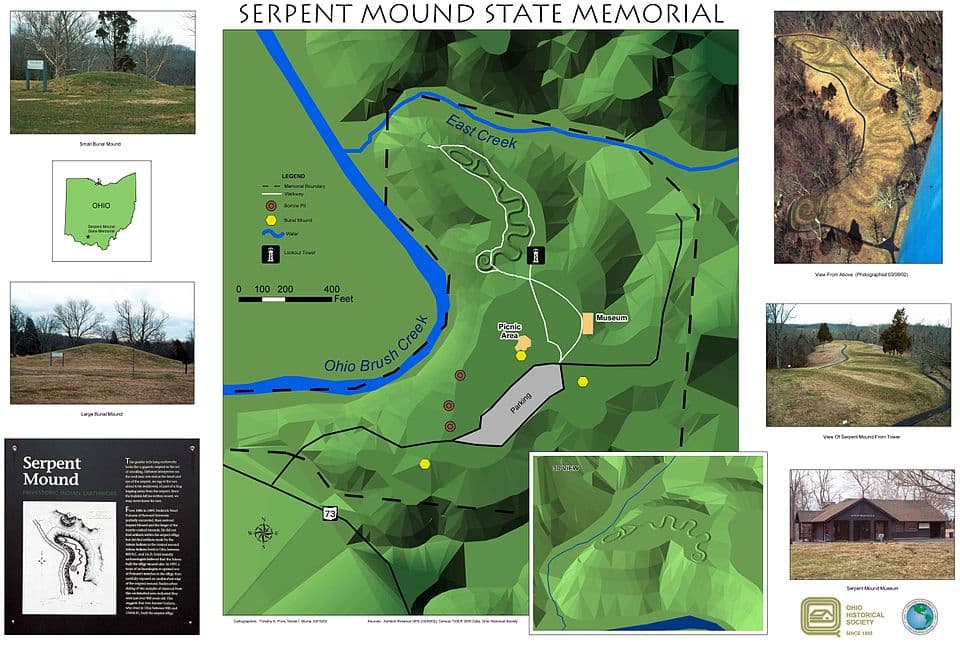
Serpent Mound
A 1,348-foot serpent effigy undulating along a hilltop in rural Ohio — its open jaws aligned to the summer solstice sunset
Hillsboro, OH (20 miles north), United States
 Wikimedia Commons
American FolkloreLiving tradition
El Santuario de Chimayo
A small adobe chapel in northern New Mexico where the dirt is believed to heal — the Lourdes of America
Santa Fe, NM (30 miles south), United States
 Wikimedia Commons
American Folklore
The Devil's Tramping Ground
A 40-foot barren circle in the North Carolina pine woods where nothing has grown for centuries and nothing placed inside it stays
Siler City, NC (10 miles north), United States
 Wikimedia Commons
American Folklore
The Marfa Lights
Unexplained lights in the Chihuahuan Desert that have been reported since at least 1883 — with a dedicated viewing platform on US-90
Marfa, TX (on-site), United States
 Wikimedia Commons
American Folklore
Bell Witch Cave
The cave on the Bell farm where America's most documented haunting reached its climax — and where Andrew Jackson allegedly fled in terror
Clarksville, TN (25 miles west), United States
 Wikimedia Commons
American Folklore
The Witch's Grave
A chained grave in a Mississippi cemetery — and the fire that burned the town exactly when the dying woman said it would
Jackson, MS (40 miles south), United States
 Wikimedia Commons
American FolkloreUNESCO
Cahokia Monks Mound
The largest earthen structure in the Americas — the center of a city that was bigger than London in 1100 CE and was abandoned before Europeans arrived
St. Louis, MO (8 miles west, across the river), United States
 Wikimedia Commons
American Folklore
Resurrection Cemetery
The cemetery gate on Archer Avenue where a vanishing hitchhiker has been reported since 1939 — Chicago's most persistent ghost
Chicago, IL (15 miles southwest of downtown), United States
 Wikimedia Commons
American Folklore
The Jersey Devil Birthplace
The Pine Barrens homestead where Mother Leeds gave birth to her 13th child — and it flew up the chimney
Atlantic City, NJ (15 miles east), United States
 Wikimedia Commons
American Folklore
Spook Hill
A stretch of road in central Florida where cars appear to roll uphill — explained by the Seminole as the resting place of a great alligator killed in battle
Lake Wales, FL (on-site), United States
 Wikimedia Commons
American Folklore
Stow Lake
The lake in Golden Gate Park where a woman lost her baby in the 1880s and still walks the shore at night, asking strangers if they've seen her child
San Francisco, CA (within the city), United States
 Wikimedia Commons
American Folklore
Niles Canyon Road
A two-lane road through a wooded canyon in Fremont where a woman in white has been reported walking the shoulder since 1920
Fremont, CA (western end of canyon), United States
 Wikimedia Commons
American Folklore
Winchester Mystery House
The San Jose mansion where Sarah Winchester built continuously for 38 years to appease the ghosts of everyone killed by Winchester rifles
San Jose, CA (on-site), United States
 Wikimedia Commons
American Folklore
Donner Pass
The specific mountain pass and lakeside campsite where 87 emigrants were trapped by snow in the winter of 1846-47 — and 36 of them died
Truckee, CA (3 miles east), United States
 Wikimedia Commons
American Folklore
Salem, MA — The Witch Trials
The village where 1692 hysteria, spectral evidence, and Puritan theology produced America's most infamous witch hunt
Salem, MA (Boston 16 miles south), United States
 Wikimedia Commons
American Folklore
Gettysburg — Ghosts of the Battlefield
The bloodiest battlefield of the Civil War, where over 7,000 men died in three days and ghost reports have persisted for 160 years
Gettysburg, PA (Harrisburg 36 miles northeast), United States
 Wikimedia Commons
American Folklore
Skinwalker Ranch — Uinta Basin Paranormal
A Utah ranch at the center of modern American paranormal culture — decades of reported anomalous phenomena in the remote Uinta Basin
Vernal, UT, United States