Collection
Sacred Mountains of the World
Mountains where gods dwell, heroes ascend, and creation begins — from Olympus to Kailash.
29 sites in this collection
Mountains are the most universal axis mundi — the place where earth meets sky and mortals can approach the divine. Mount Olympus housed the Greek gods, Mount Kailash is the cosmic pillar of Hindu and Buddhist cosmology, and Mount Shasta is home to Skell in Modoc tradition. This collection gathers the world's most mythologically significant peaks and explores what makes mountains sacred across cultures.
The patterns repeat across traditions that had no contact with each other. Mountains are where creation happens, where gods speak, where the dead ascend, and where the world is held up. Mount Sinai is where Moses received the law. Adam's Peak in Sri Lanka holds a footprint venerated by Buddhists, Hindus, Muslims, and Christians simultaneously. Croagh Patrick in Ireland draws tens of thousands of pilgrims on the last Sunday of July every year — a Christian pilgrimage onto a mountain that was sacred long before Christianity arrived. Uluru in central Australia is not a mountain in the topographic sense, but functions as the same kind of cosmological anchor for the Anangu people.
Height alone doesn't explain it. Mount Kailash, at 22,000 feet in the Tibetan Plateau, has never been summited — not because the climb is impossible, but because the mountain is considered too sacred to set foot on its upper slopes. Four rivers originate near Kailash, and four major religions — Hinduism, Buddhism, Jainism, and Bön — each have distinct but overlapping traditions about what the mountain is and why it matters. Olympus, by contrast, was clearly visible to the people who made it divine — a 9,570-foot peak at the northern edge of Greece, perpetually cloud-capped, its summit genuinely hidden from the valleys below.
This collection covers sacred peaks from six continents, organized by mythology, geography, and type of sacredness — including mountains that are pilgrimage destinations, mountains that appear in origin stories, and mountains believed to be physical homes of gods.
 Wikimedia Commons
California IndigenousLiving tradition
Mount Shasta
The volcanic peak where the sky spirit Skell made his home among the Klamath, Modoc, Wintu, and Achumawi peoples
Mount Shasta, CA, United States
 Wikimedia Commons
Southwest — Navajo & HopiLiving tradition
Dine Tah — Navajo Sacred Mountains
The four sacred mountains that mark the boundaries of the Navajo homeland
Window Rock, AZ (Navajo Nation capital), United States
 Wikimedia Commons
Southwest — Navajo & Hopi
Shiprock
The volcanic neck the Navajo call Tse Bit'a'i — the rock with wings — where the people were carried to safety on the back of a great bird
Farmington, NM (30 miles east), United States
 Wikimedia Commons
Southwest — Navajo & Hopi
Spider Rock
The 800-foot sandstone spire in Canyon de Chelly where Spider Woman taught the Navajo to weave
Chinle, AZ, United States
 Wikimedia Commons
American Folklore
Devils Tower
The igneous monolith sacred to over 20 tribal nations, known to the Lakota as Mato Tipila — Bear Lodge
Sundance, WY (28 miles northwest), United States
 Wikimedia Commons
California Indigenous
Mount Tamalpais
The mountain the Coast Miwok considered the center of the world — whose profile is a sleeping woman visible from across the Bay
Mill Valley, CA (at the mountain's base), United States
 Wikimedia Commons
California Indigenous
Mount Konocti
The dormant volcano over Clear Lake where two Pomo chiefs fought to the death and became the mountain's twin peaks
Kelseyville, CA / Lakeport, CA, United States
 Wikimedia Commons
Plains NationsLiving tradition
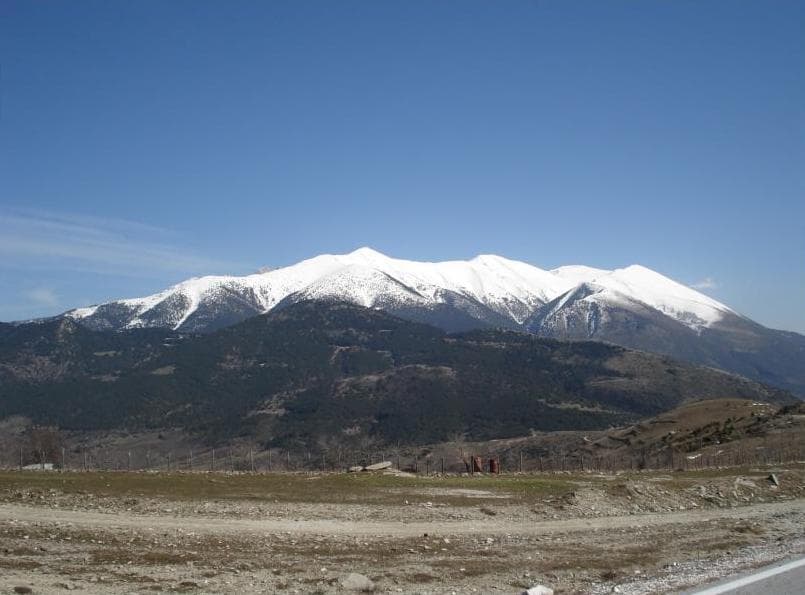
Black Hills — He Sapa, Heart of Everything That Is
The Lakota sacred center — site of vision quests, creation narratives, and an unresolved sovereignty dispute
Rapid City, SD, United States
 Wikimedia Commons
Ancient GreekUNESCO
Mount Olympus
The highest peak in Greece and the mythological seat of the twelve Olympian gods — where Zeus held court above the clouds
Litochoro, Greece (Thessaloniki 60 mi)
 Wikimedia Commons
ChineseLiving traditionUNESCO
Mount Tai — Sacred Peak of the East
The most sacred of China's Five Great Mountains — where emperors performed the Feng and Shan sacrifices to heaven and earth
Tai'an, Shandong (Beijing 260 mi), China
 Wikimedia Commons
Chinese
Mount Kunlun — Abode of the Immortals
The mythological axis of the world in Chinese cosmology — dwelling of the Queen Mother of the West and source of the Yellow River
Golmud, Qinghai (remote), China
 Wikimedia Commons
JapaneseLiving traditionUNESCO
Mount Fuji — Dwelling of the Fire Goddess
Japan's sacred volcanic peak — dwelling of the goddess Konohanasakuya-hime and the most iconic mountain on Earth
Tokyo (60 mi) / Fujiyoshida, Japan
 Wikimedia Commons
Hindu / VedicLiving tradition
Kedarnath — Abode of Shiva
The highest of the twelve Jyotirlinga temples, set at 11,755 feet in the Himalayas — where Shiva hid from the Pandavas in the form of a bull
Rudraprayag, Uttarakhand (50 mi by road), India
 Wikimedia Commons
Celtic / Irish
Glastonbury Tor — Isle of Avalon
The conical hill rising from the Somerset Levels — long identified as the Isle of Avalon, where King Arthur was carried after his final battle
Glastonbury, Somerset; Bristol (25 mi), United Kingdom
 Wikimedia Commons
Norse / Scandinavian
Jotunheimen — Realm of the Giants
Norway's highest mountain range — named for the Jötnar, the primordial giants who were the gods' oldest enemies and the forces of untamed nature
Lom, Norway; Oslo (200 mi), Norway
 Wikimedia Commons
Aboriginal AustralianLiving traditionUNESCO
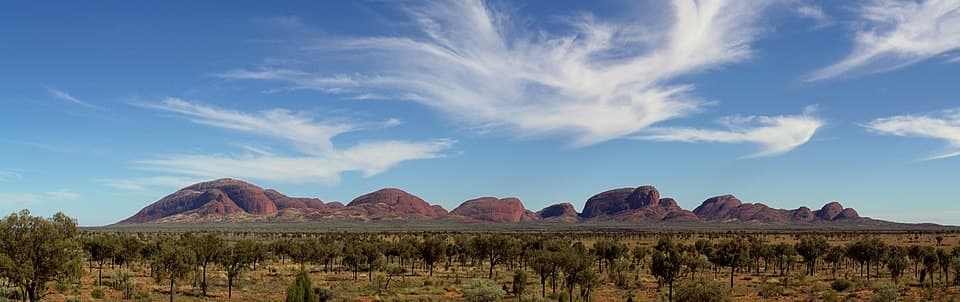
Uluru — Navel of the Dreamtime
The immense sandstone monolith at the heart of Australia — a site of profound sacred significance to the Anangu people, inscribed with Dreamtime narratives in its every feature
Yulara, NT (resort village); Alice Springs (280 mi), Australia
 Wikimedia Commons
Aboriginal AustralianLiving traditionUNESCO
Kata Tjuta — Abode of the Wanambi
The 36 domed rock formations west of Uluru — dwelling place of the great serpent Wanambi, whose breath is the wind that funnels through the Valley of the Winds
Yulara, NT (resort village); Alice Springs (280 mi), Australia
 Wikimedia Commons
Korean ShamanicUNESCO
Hallasan — Abode of the Mountain Goddess
The volcanic peak at the center of Jeju Island — South Korea's highest mountain, home of the goddess Seolmundae Halmang who created the island from her own body
Jeju City, Jeju Province (within island), South Korea
 Wikimedia Commons
Korean ShamanicLiving tradition
Jirisan — Sacred Mountain of Wisdom
The largest mountain massif in mainland South Korea — a sacred peak revered in shamanism, Buddhism, and Daoist tradition as a place where the foolish become wise
Namwon, North Jeolla Province; Hadong, South Gyeongsang Province, South Korea
 Wikimedia Commons
Southeast Asian
Phnom Kulen
The sacred mountain where the Khmer Empire was born — home to the River of a Thousand Lingas and the birthplace of Angkorian civilization
Siem Reap, Cambodia
 Wikimedia Commons
East African
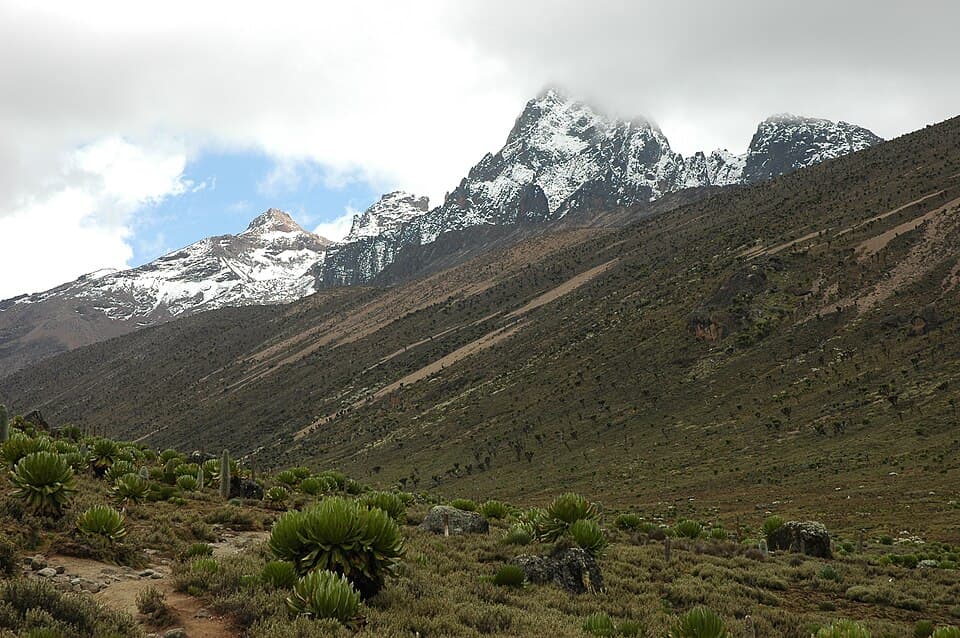
Ol Doinyo Lengai
The Mountain of God — the only active natrocarbonatite volcano on Earth, where the Maasai god Enkai dwells and cattle were first lowered to humanity on a leather thong
Arusha, Tanzania
 Wikimedia Commons
East AfricanUNESCO
Mount Kenya (Kirinyaga)
The Mountain of Brightness — seat of the Kikuyu creator god Ngai, toward which all prayers are directed and from which the first man and woman descended
Nanyuki, Kenya
 Wikimedia Commons
East AfricanUNESCO
Kilimanjaro (Kibo Peak)
Africa's highest peak — the 'House of God' in Chagga tradition, whose vanishing glaciers were the throne of the divine and whose forests sheltered spirits
Moshi, Tanzania
 Wikimedia Commons
Polynesian
Havai'i Nui (Mauna Kea)
The sacred summit of Hawai'i — meeting place of earth and sky, where the snow goddess Poliahu dwells and Hawaiian cultural identity confronts modern astronomy
Hilo, Hawai'i, United States
 Wikimedia Commons
Slavic
Bald Mountain (Łysa Góra / Ślęża)
The mountain of witches and the Slavic sabbath — the original 'Night on Bald Mountain,' where pre-Christian rites lingered as witchcraft legends
Wrocław, Poland
 Wikimedia Commons
AmazonianUNESCO
Tepui of Roraima
The table mountain that inspired 'The Lost World' — sacred to the Pemon people as the stump of a mighty tree that once bore all the world's fruit
Santa Elena de Uairén, Venezuela
 Wikimedia Commons
Abrahamic — JudaismUNESCO
Mount Sinai (Jebel Musa)
Where God gave Moses the Ten Commandments and the Torah — the sacred mountain where Judaism, Christianity, and Islam converge
Nuweiba, Egypt
 Wikimedia Commons
DogonUNESCO
Cliffs of Bandiagara — Land of the Dogon & the Nommo
A 150-kilometer sandstone escarpment in Mali where the Dogon people hold the cosmology of the creator Amma and the amphibious ancestral Nommo.
Bandiagara / Mopti, Mali
 Wikimedia Commons
Tibetan Buddhist, Bön, Hindu & Jain
Mount Kailash — Axis Mundi of Four Religions
The never-climbed peak in western Tibet held sacred at once by Tibetan Buddhists, the Bön, Hindus, and Jains — the still center of the world, circled by pilgrims on a 52-kilometer kora.
Darchen, Ngari Prefecture, Tibet, China