 Wikimedia Commons
CultureGreece / Mediterranean
Ancient Greek
The mythology of the Hellenic world — Olympian gods, heroes, oracles, and the landscapes that shaped Western storytelling.
Greek mythology is the foundation of Western literary tradition. From Homer's epics to Hesiod's Theogony, from the tragedies of Sophocles to the histories of Herodotus, the Greeks anchored their stories to specific landscapes — Mount Olympus, Delphi, Crete, the islands of the Aegean. Their gods were not distant abstractions but personalities with jealousies, loves, and grudges, dwelling in identifiable places. The Oracle at Delphi shaped geopolitics for centuries. The Labyrinth of Knossos may preserve memory of Minoan civilization. The cave where Zeus was born is a real cave you can visit. Greek mythology is remarkable for the density of its geographic specificity — nearly every river, mountain, grove, and spring had its associated deity or story.
8 entries mapped
 Wikimedia Commons
Ancient GreekUNESCO
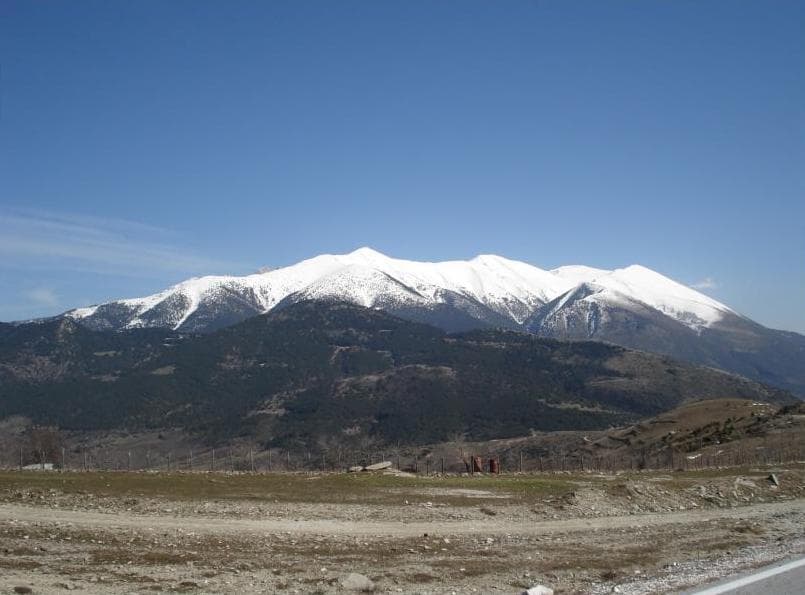
Mount Olympus
The highest peak in Greece and the mythological seat of the twelve Olympian gods — where Zeus held court above the clouds
Litochoro, Greece (Thessaloniki 60 mi)
 Wikimedia Commons
Ancient GreekUNESCO
Delphi — Oracle of Apollo
The navel of the world — where the Pythia spoke prophecy over a chasm, and kings and generals sought divine counsel for a thousand years
Delphi, Greece (Athens ~110 mi)
 Wikimedia Commons
Ancient GreekUNESCO
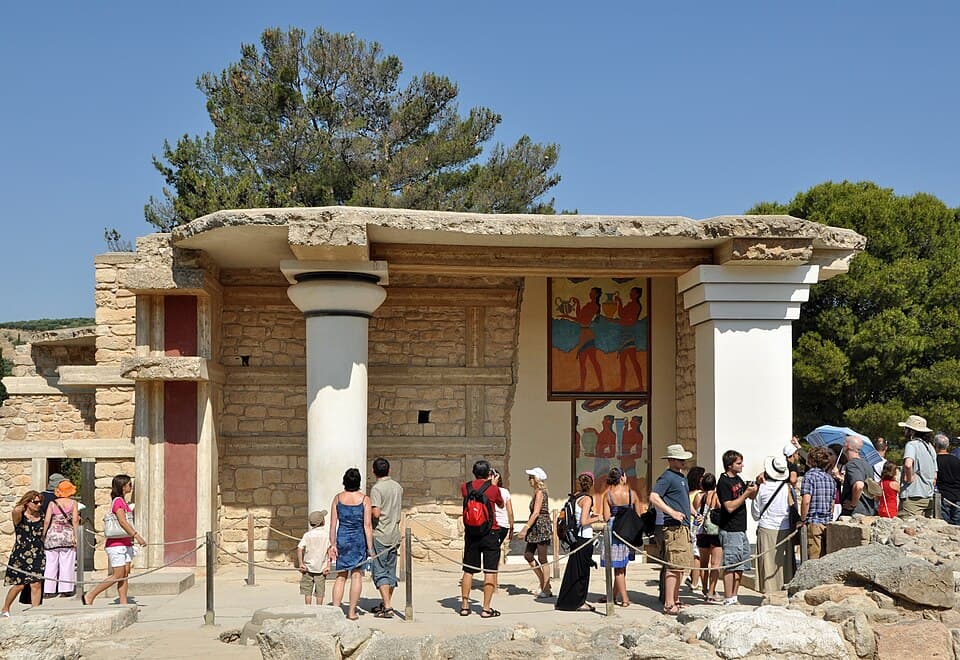
Knossos — Palace of the Minotaur
The Bronze Age palace on Crete that may have inspired the myth of the Labyrinth — where Theseus slew the Minotaur in the halls of King Minos
Heraklion, Crete, Greece
 Wikimedia Commons
Ancient Greek
Diktaean Cave — Birthplace of Zeus
The cave on Crete where Rhea hid the infant Zeus from his father Kronos — the birthplace of the king of the gods
Heraklion, Crete (45 mi), Greece
Wikimedia CommonsAncient GreekUNESCO
The Parthenon & Acropolis
The temple of Athena Parthenos on the Acropolis — the symbol of Classical Greece and Western civilization, housing a gold-ivory statue by Phidias
Athens, Greece
 Wikimedia Commons
Ancient GreekUNESCO
Troy (Hisarlik)
The legendary site of the Trojan War — archaeologically verified through multiple city layers, hero of Homer's Iliad, home of Priam and Hector
Hisarlik, Çanakkale, Turkey
 Wikimedia Commons
Ancient GreekUNESCO
Olympia — Temple of Zeus
Birthplace of the Olympic Games and home to the colossal gold-ivory statue of Zeus — one of the Seven Wonders of the Ancient World
Olympia, Peloponnese, Greece
 Wikimedia Commons
Ancient GreekUNESCO
Temple of Artemis at Ephesus
One of the Seven Wonders of the Ancient World — the vast temple to Artemis, destroyed and rebuilt multiple times, reduced to a single column today
Selçuk, Izmir, Turkey