 Wikimedia Commons
Itinerary · Illinois, Ohio, Iowa, Minnesota & Michigan
Midwest Earthworks & Mound Builders
Ancient mounds, sacred pipestone, and the ghost roads of the Great Lakes
6 stops · 10-12 days · ~2,400 km
Long before European contact, the peoples of the Mississippi and Ohio river valleys built some of the largest earthworks on Earth. Cahokia was bigger than medieval London. The Serpent Mound aligned to solstices a thousand years before the telescope. This route crosses the American heartland through sites that challenge every assumption about pre-Columbian North America.
Trail Map
Route Timeline

Illinois, United States
The largest earthen structure in the Americas — the center of a city that was bigger than London in 1100 CE and was abandoned before Europeans arrived
“Start at Cahokia Monks Mound in Collinsville, Illinois — the largest pre-Columbian earthwork north of Mexico. Climb the 100-foot mound for a view of the entire 2,200-acre complex. The interpretive center provides essential context.”

Illinois, United States
The cemetery gate on Archer Avenue where a vanishing hitchhiker has been reported since 1939 — Chicago's most persistent ghost
“North to Justice, Illinois for Resurrection Cemetery — home of Resurrection Mary, Chicago's most famous ghost. The cemetery gates where she allegedly vanishes are on Archer Avenue. A classic urban legend rooted in 1930s dance-hall culture.”

Ohio, United States
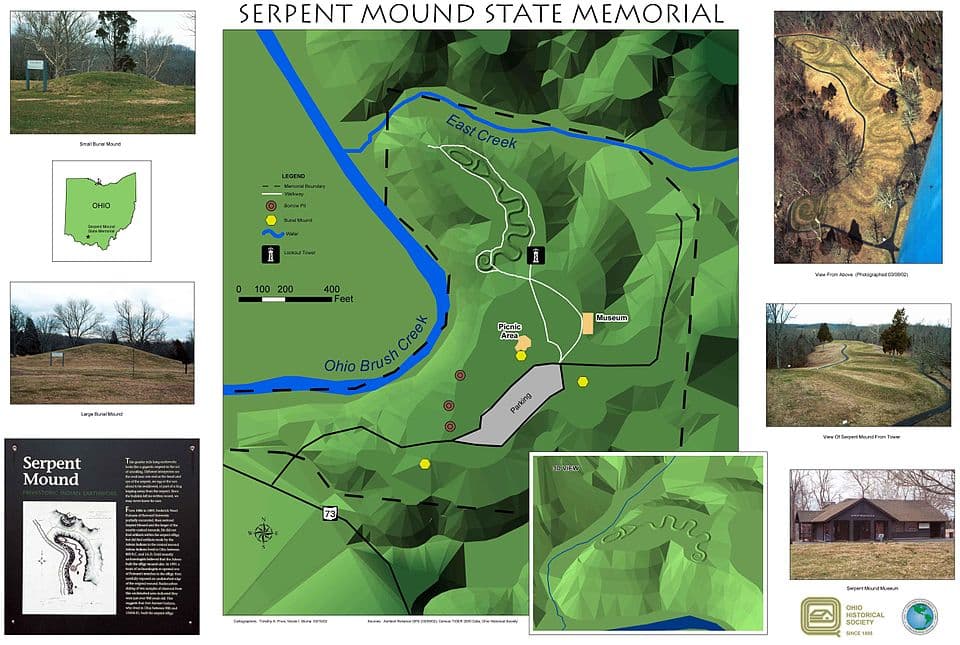
A 1,348-foot serpent effigy undulating along a hilltop in rural Ohio — its open jaws aligned to the summer solstice sunset
“East to Peebles, Ohio for the Great Serpent Mound. The quarter-mile-long effigy snakes along a crater rim with astronomical alignments. Walk the full path around it. Visit during summer solstice if you can — the serpent's head aligns with sunset.”

Iowa, United States
Bird and bear mounds built by Woodland peoples 1,400+ years ago along the bluffs of the Upper Mississippi
“West across Indiana and Illinois to Effigy Mounds in northeast Iowa. Over 200 mounds, including 31 animal-shaped effigies — bears and birds on the bluffs above the Mississippi. The Fire Point trail is strenuous but the river views justify it.”

Minnesota, United States
The red catlinite quarry considered sacred neutral ground by dozens of Plains and Woodlands nations for centuries
“Continue to Pipestone National Monument in southwest Minnesota. The quartzite quarries here have been sacred to dozens of Indigenous nations for 3,000 years. The red pipestone (catlinite) is still quarried by enrolled tribal members. The Circle Trail passes quarry pits, tallgrass prairie, and a waterfall.”

Michigan, United States
The Ojibwe legend of a mother bear waiting for her drowned cubs — turned to sand and stone by the Great Spirit Manitou
“East to Sleeping Bear Dunes on Lake Michigan. The Ojibwe story: a mother bear and two cubs swam across the lake from Wisconsin. The cubs drowned and became the Manitou Islands. The mother still waits on the bluff. Hike the Dune Climb and take the ferry to South Manitou Island.”
See all 6 stops plotted on the interactive map.
View these sites on the map