 Wikimedia Commons
CultureWest Africa
West African (Ashanti / Dahomey / Igbo)
The mythological traditions of the Ashanti, Fon/Dahomey, and Igbo peoples — Anansi the spider, the Vodun spirits, the Alusi deities, and the sacred groves of Ghana, Benin, and Nigeria.
Beyond the Yoruba tradition (covered separately), West Africa hosts dozens of rich mythological systems. The Ashanti (Asante) of Ghana venerate Nyame, the supreme sky god, and tell the stories of Anansi the spider — a trickster figure whose tales traveled to the Americas through the slave trade and survive as 'Anancy stories' in Jamaica and the American South. The Fon people of Dahomey (modern Benin) developed the Vodun spiritual system — the origin of Haitian Vodou and Louisiana Voodoo — with a complex pantheon including Mawu-Lisa (the creator duality), Dan (the cosmic serpent), and Legba (the divine trickster and guardian of crossroads). The Igbo of southeastern Nigeria honor the Alusi — nature deities and ancestral spirits — along with Chukwu, the supreme creator, and Ala/Ani, the earth goddess whose authority governs morality and fertility. These traditions share deep structural similarities while maintaining distinct identities, and all remain actively practiced today.
5 entries mapped
 Wikimedia Commons
West African (Ashanti / Dahomey / Igbo)
Manhyia Palace & the Golden Stool
The seat of the Ashanti king and the shrine of the Golden Stool — Sika Dwa Kofi, the soul of the Ashanti nation, descended from heaven
Kumasi, Ghana
 Wikimedia Commons
West African (Ashanti / Dahomey / Igbo)UNESCO
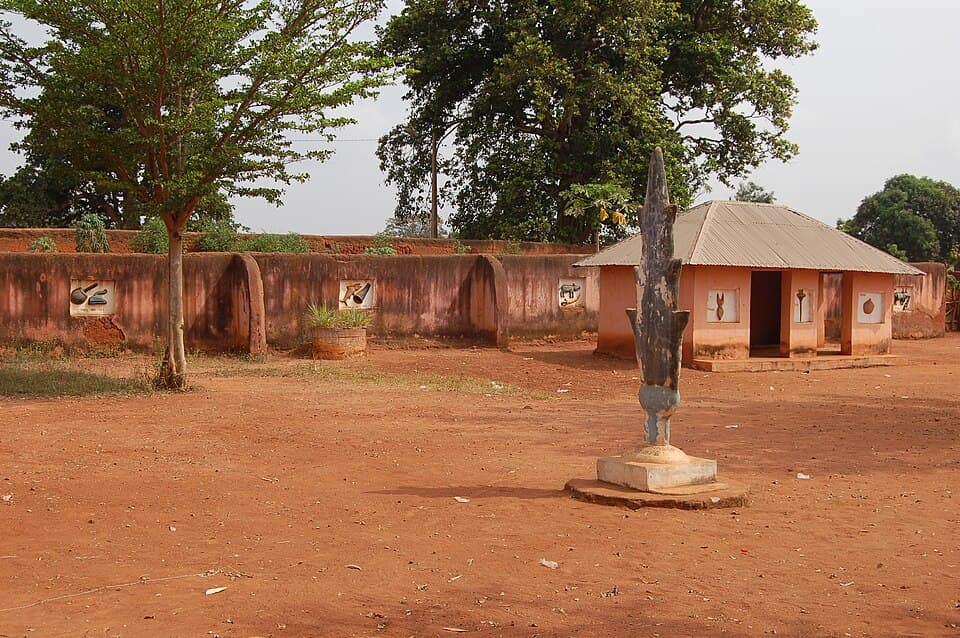
Royal Palaces of Abomey
The palace complex of the Dahomey kings — where Vodun priests consecrated thrones with blood, and the Amazons of Dahomey drilled in the courtyards
Cotonou, Benin
 Wikimedia Commons
West African (Ashanti / Dahomey / Igbo)
Arochukwu Long Juju Slave Route
The seat of the Ibini Ukpabi oracle — the 'Long Juju' of Arochukwu, the most powerful oracle in Igboland and a feared arbiter of justice for centuries
Umuahia, Nigeria
 Wikimedia Commons
West African (Ashanti / Dahomey / Igbo)
Sacred Python Temple of Ouidah
The Temple of the Pythons — a living Vodun shrine where royal pythons roam freely, honoring Dan, the cosmic serpent who holds the world together
Cotonou, Benin
 Wikimedia Commons
West African (Ashanti / Dahomey / Igbo)UNESCO
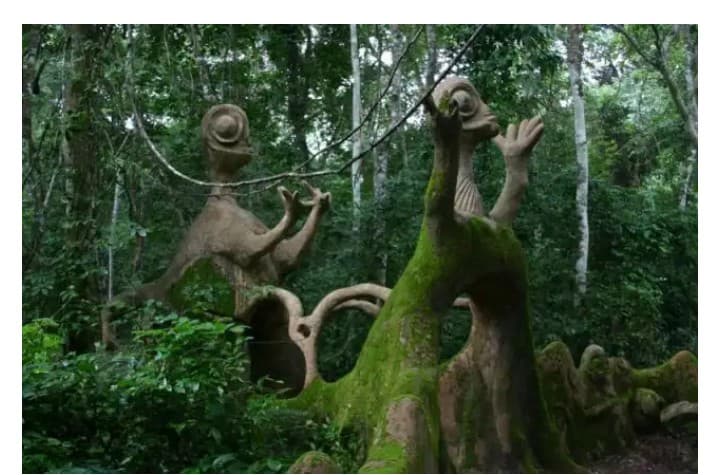
Osun-Osogbo Sacred Grove
The last surviving sacred forest in Yorubaland — UNESCO-protected grove of the river goddess Osun, where annual festivals draw devotees from across the world
Osogbo, Nigeria