 Wikimedia Commons
CultureSoutheast Asia
Southeast Asian
The Hindu-Buddhist and animist traditions of mainland and maritime Southeast Asia — from the Khmer temples to the spirit houses of Thailand and the rice goddess of Bali.
Southeast Asian mythology is a layered palimpsest of indigenous animism, Hindu-Buddhist cosmology, and later Islamic influence. The region — spanning modern Cambodia, Thailand, Myanmar, Laos, Vietnam, Indonesia, Malaysia, and the Philippines — received Indian cultural influence through centuries of maritime trade, producing syncretic civilizations of extraordinary sophistication. The Khmer Empire built Angkor Wat as a model of Mount Meru, the cosmic axis. Javanese courts staged shadow puppet performances of the Ramayana and Mahabharata reinterpreted through local sensibilities. Balinese Hinduism preserved traditions that vanished from India itself. Beneath these overlays, older animist traditions persist: the naga serpents of the Mekong, the phi spirits of Thailand and Laos, the rice goddess Dewi Sri of Java and Bali. Southeast Asian mythology is notable for its capacity to absorb and transform — Hindu gods become local protectors, Buddhist temples incorporate animist shrines, and ancient earth spirits coexist with world religions in everyday practice.
5 entries mapped
 Wikimedia Commons
Southeast AsianUNESCO
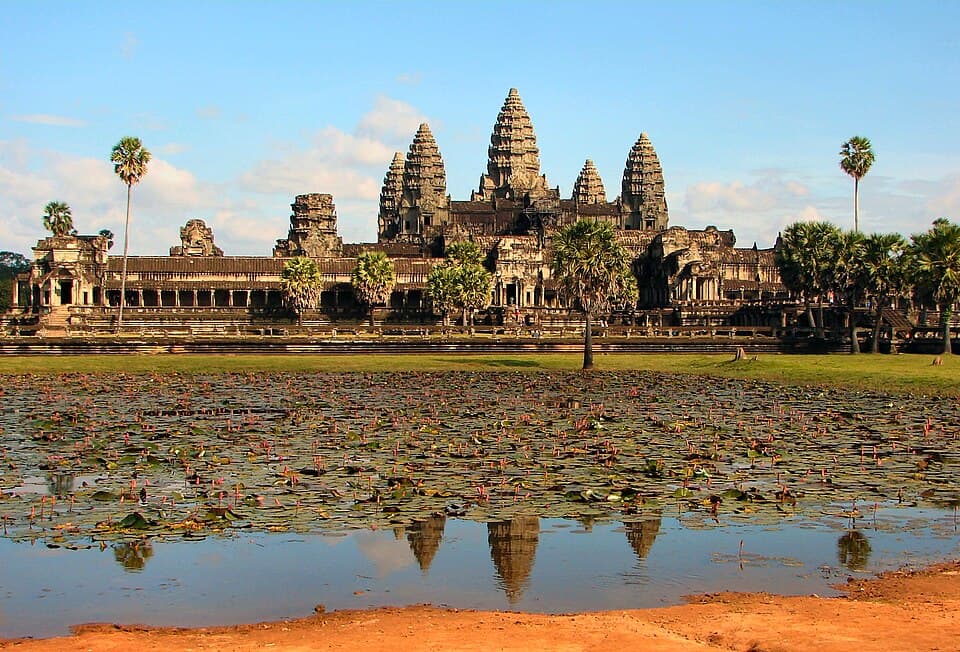
Angkor Wat
The largest religious monument on Earth — a stone model of the Hindu cosmos built by the Khmer Empire as the earthly Mount Meru
Siem Reap, Cambodia
 Wikimedia Commons
Southeast Asian
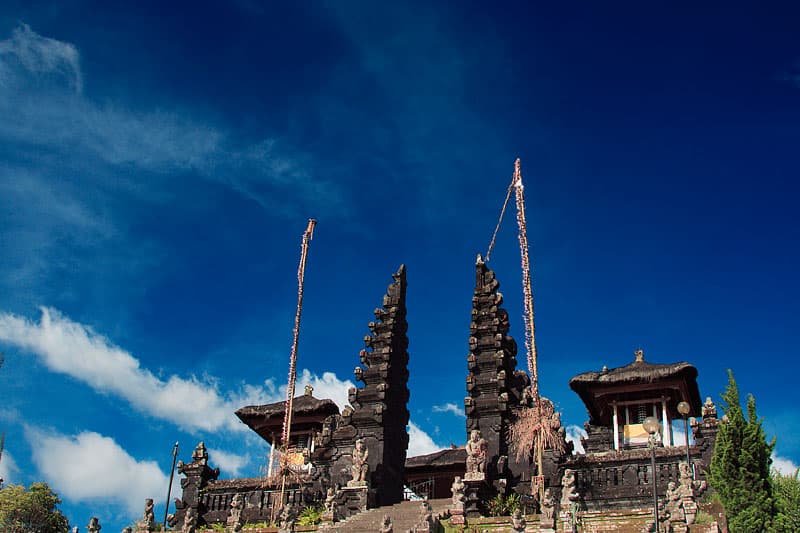
Pura Besakih (Mother Temple of Bali)
The holiest Hindu temple in Bali, perched on the slopes of Mount Agung — where the gods descend to Earth during ceremony
Klungkung, Bali, Indonesia
 Wikimedia Commons
Southeast Asian
Phnom Kulen
The sacred mountain where the Khmer Empire was born — home to the River of a Thousand Lingas and the birthplace of Angkorian civilization
Siem Reap, Cambodia
 Wikimedia Commons
Southeast AsianUNESCO
Prambanan Temple
The largest Hindu temple in Southeast Asia — a 9th-century stone poem to Shiva rising from the Javanese plain, rivaling Angkor in ambition
Yogyakarta, Indonesia
 Wikimedia Commons
Southeast Asian
Naga Caves of the Mekong
The sacred stretch of the Mekong where the Naga king dwells beneath the river — source of the Naga Fireballs that rise from the water each October
Nong Khai, Thailand