 Wikimedia Commons
CulturePacific / Oceania
Polynesian
The navigators' mythology — Maui the trickster, Pele the volcano goddess, the sacred marae platforms, and the oral traditions that guided the greatest ocean voyages in human history.
Polynesian mythology spans the vast triangle of the Pacific Ocean — from Hawai'i in the north to Aotearoa (New Zealand) in the south to Rapa Nui (Easter Island) in the east. The Polynesian peoples, who colonized this immense ocean between roughly 1500 BCE and 1200 CE, carried their gods, genealogies, and navigation knowledge across thousands of miles of open water. Core figures recur across the triangle with local variations: Maui, the trickster demigod who fished up islands and snared the sun; Tangaroa (Ta'aroa, Kanaloa), god of the sea; Tu (Ku), god of war; Rongo (Lono), god of agriculture and peace. In Hawai'i, Pele the volcano goddess is among the most vivid mythological figures on Earth — her eruptions at Kilauea are not metaphor but living theophany. Polynesian sacred sites — the marae (stone temple platforms) of Tahiti and the Marquesas, the heiau of Hawai'i, the wharenui of the Maori — anchor genealogy and spiritual power to specific places. This is a living tradition: in Aotearoa, Maori spiritual authority over ancestral lands has legal force.
5 entries mapped
 Wikimedia Commons
PolynesianUNESCO
Taputapuatea Marae
The most sacred marae in Polynesia — the international temple of the god Oro on Raiatea, from which all Polynesian voyaging traditions radiate
Uturoa, Raiatea, French Polynesia
 Wikimedia Commons
Polynesian
Te Reinga (Cape Reinga)
The leaping-off place of spirits — where Maori souls depart the world of the living by sliding down a pohutukawa root into the underworld sea
Kaitaia, New Zealand
 Wikimedia Commons
PolynesianUNESCO
Rano Raraku (Easter Island Moai Quarry)
The volcano quarry where 887 moai were carved — the unfinished statues still embedded in the rock face, frozen mid-creation for 500 years
Hanga Roa, Rapa Nui, Chile
 Wikimedia Commons
Polynesian
Havai'i Nui (Mauna Kea)
The sacred summit of Hawai'i — meeting place of earth and sky, where the snow goddess Poliahu dwells and Hawaiian cultural identity confronts modern astronomy
Hilo, Hawai'i, United States
Wikimedia CommonsPolynesianUNESCO
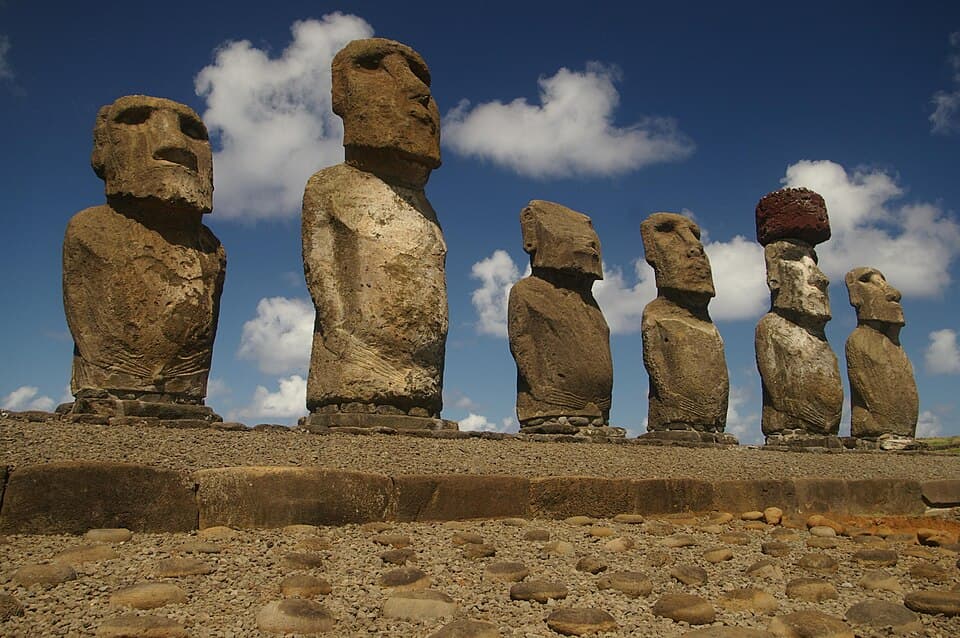
Ahu Tongariki & the Moai — Rapa Nui
Monumental stone ancestors carved by the Rapa Nui people — 887 moai statues representing deified ancestors, with Ahu Tongariki the largest restored platform
Hanga Roa (settlement on Rapa Nui), Chile