 Wikimedia Commons
CultureEast Africa
East African
The mythological and spiritual traditions of East Africa — the Maasai, Kikuyu, and Swahili peoples, the sacred peaks of Kilimanjaro and Mount Kenya, and the Great Rift Valley's origin stories.
East African mythology encompasses the spiritual traditions of hundreds of peoples across modern Kenya, Tanzania, Uganda, Ethiopia, and the Great Rift Valley. The Maasai venerate Enkai (Engai), the supreme deity who dwells atop Ol Doinyo Lengai, an active volcano whose name means 'Mountain of God' in Maa. The Kikuyu trace their origin to Gikuyu and Mumbi, placed by Ngai (God) on the slopes of Mount Kenya (Kirinyaga, 'Mountain of Brightness'). The Swahili coast blends Bantu, Arabic, and Islamic traditions in a maritime culture stretching from Somalia to Mozambique. Ethiopian mythology draws from ancient Cushitic traditions, the Solomonic legend connecting Ethiopia's emperors to King Solomon and the Queen of Sheba, and the unique Ge'ez Christian tradition that preserves texts lost elsewhere — including the Book of Enoch. The Great Rift Valley itself, where humanity first evolved, provides the geological stage for some of the oldest origin stories on Earth.
5 entries mapped
 Wikimedia Commons
East African
Ol Doinyo Lengai
The Mountain of God — the only active natrocarbonatite volcano on Earth, where the Maasai god Enkai dwells and cattle were first lowered to humanity on a leather thong
Arusha, Tanzania
 Wikimedia Commons
East AfricanUNESCO
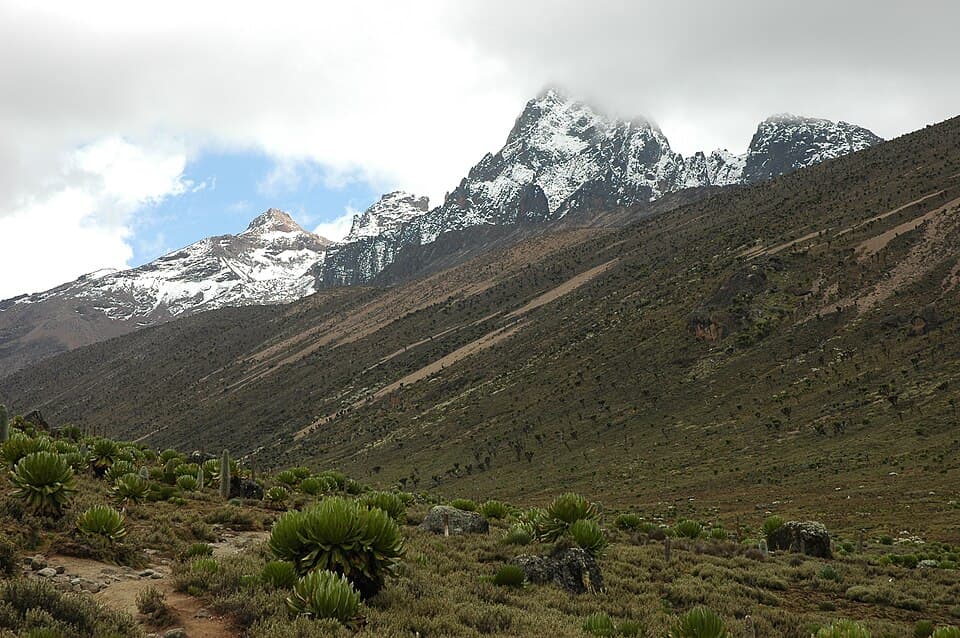
Mount Kenya (Kirinyaga)
The Mountain of Brightness — seat of the Kikuyu creator god Ngai, toward which all prayers are directed and from which the first man and woman descended
Nanyuki, Kenya
 Wikimedia Commons
East AfricanUNESCO
Lalibela Rock-Hewn Churches
The New Jerusalem carved from living rock — eleven medieval churches hewn directly from the Ethiopian bedrock by angels, according to tradition
Lalibela, Ethiopia
 Wikimedia Commons
East African
Lake Natron
The blood-red soda lake at the foot of the Mountain of God — cradle of 2.5 million flamingos and a landscape of unearthly desolation sacred to the Maasai
Arusha, Tanzania
 Wikimedia Commons
East AfricanUNESCO
Kilimanjaro (Kibo Peak)
Africa's highest peak — the 'House of God' in Chagga tradition, whose vanishing glaciers were the throne of the divine and whose forests sheltered spirits
Moshi, Tanzania