 Wikimedia Commons
CultureOrkney, Scotland
Neolithic Orkney
The remarkable Neolithic civilization of the Orkney Islands, builders of Skara Brae, the Ring of Brodgar, and Maeshowe — some of Europe's oldest and most sophisticated monuments.
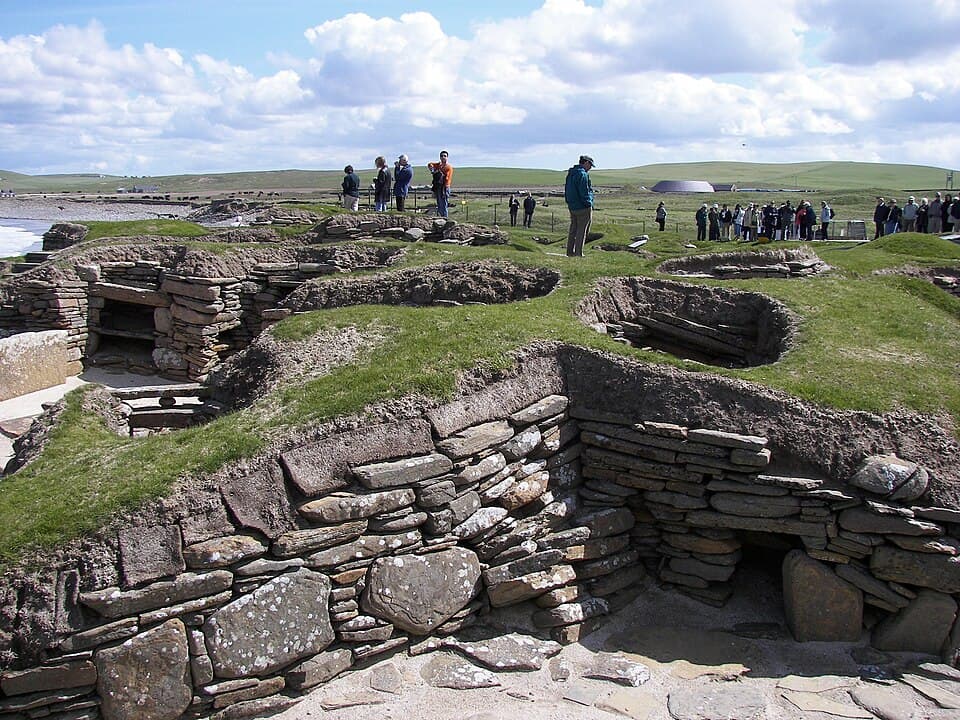
The Neolithic peoples of Orkney (c. 3500-2500 BCE) created one of the world's most advanced prehistoric societies, despite their remote island location. The Orkney archipelago's rich marine and terrestrial resources (fish, seals, shellfish, cattle, sheep) supported a thriving population organized into sophisticated communities. Skara Brae, Europe's most complete Neolithic village, reveals domestic life frozen in stone: hearths, beds, dressers, and storage facilities. The Ring of Brodgar and Maeshowe demonstrate astronomical knowledge and ceremonial organization. What distinguishes Orkney Neolithic is not just monumental scale but the integration of monuments into a ritual landscape connected by processional ways. These were not isolated sites but part of a unified ceremonial complex — the Heart of Neolithic Orkney, now UNESCO-listed. The Orkney Neolithic preserved practices and forms that would influence Bronze Age and Iron Age Britain. The isolation of the islands and preservation of sites have made Orkney crucial to understanding Neolithic Europe.
2 entries mapped
Wikimedia CommonsNeolithic OrkneyUNESCO
Skara Brae
Europe's most complete Neolithic village, with stone furniture and hearths still intact, buried under sand for 4,000 years
Stromness, Orkney, Scotland
 Wikimedia Commons
Neolithic OrkneyUNESCO
Ring of Brodgar
A massive stone circle set between two lochs — 104 meters in diameter with 27 surviving stones, originally 60, part of a sacred Neolithic landscape
Stromness, Orkney, Scotland