 Wikimedia Commons
CultureJordan / Arabia
Nabataean
The rock-carving desert traders of Arabia, builders of Petra and masters of desert water engineering and long-distance trade networks.
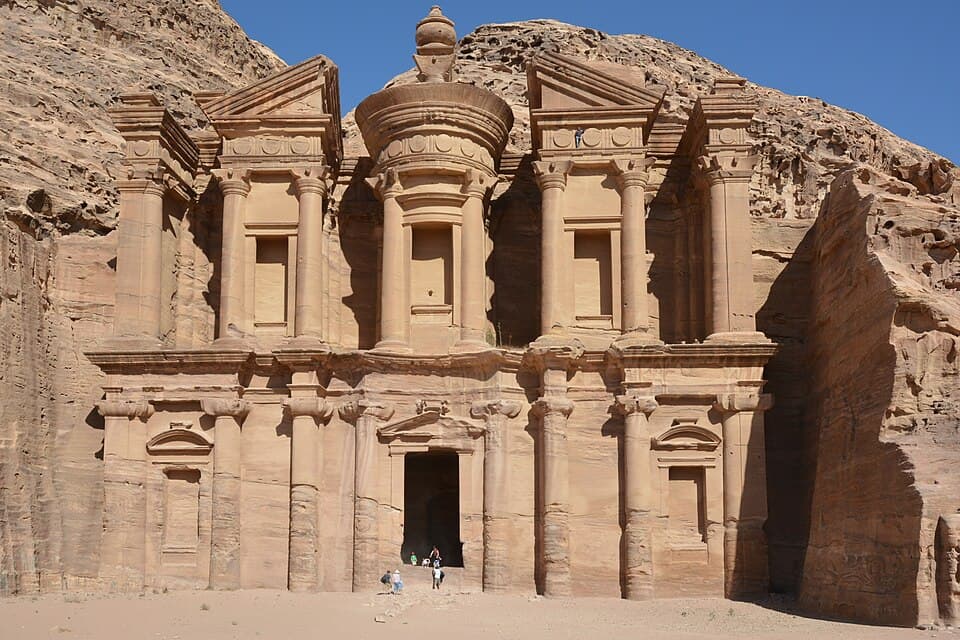
The Nabataeans (c. 4th century BCE-1st century CE) were Semitic Arabs who controlled crucial trade routes connecting Arabia, the Mediterranean, and India. Far from being mere nomads, they were sophisticated urban planners, engineers, and merchants who built cities in the desert through brilliant water management — dams, cisterns, and channels that captured rare rainfall and underground aquifers. Petra, their capital, was cut directly from rose-red sandstone cliffs, combining Nabataean, Hellenistic, and Near Eastern architectural elements. The Nabataeans were polytheists, worshipping the Arabian deity Dushara (the 'Mighty One of Shara,' a mountain) along with Al-Uzza ('the Mighty One,' a pre-Islamic Arabian goddess). After Roman annexation in 106 CE, Nabataean culture gradually merged with Greco-Roman and Islamic traditions. Their water technology remains a marvel of ancient engineering. Petra was brought to European scholarly attention in 1812 by Swiss explorer Johann Burckhardt, though local Bedouin communities had known the site continuously.
1 entry mapped