 Wikimedia Commons
CultureColombian Andes
Muisca
The Chibcha-speaking goldsmith civilization of the Colombian Andes — the people whose sacred-lake investiture ritual gave the world the legend of El Dorado.
The Muisca (sometimes called Chibcha after their language) inhabited the high plateaus of the Eastern Cordillera of the Colombian Andes — the Altiplano Cundiboyacense around modern Bogotá and Tunja — from roughly the 6th century CE until the Spanish conquest of the 1530s. They were not a single empire but a confederation of chiefdoms, the most powerful ruled by the zipa of Bacatá to the south and the zaque of Hunza to the north.
The Muisca were among the finest goldsmiths of the pre-Columbian Americas. They did not value gold as bullion but as a sacred material — tumbaga, an alloy of gold and copper, was offered to the gods by the thousands in the form of tunjos, small votive figures pressed flat and deposited in lakes, caves, and temples. Gold was a gift to the divine, not a store of wealth, and this single difference in worldview drove Spanish conquistadors to a frenzy they never satisfied.
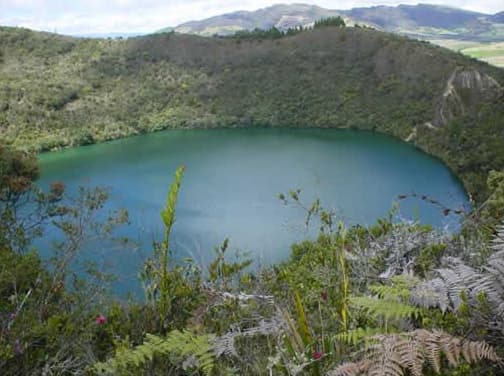
Muisca cosmology centered on the sun (Sué) and the moon (Chía), and on a network of sacred lakes understood as openings to the world of the gods. Lake Guatavita was the most important. There, in the installation rite of a new chief, the future ruler was coated in gold dust and carried on a raft to the lake's center to make offerings to the goddess of the waters — the ceremony that, retold and distorted by Spanish ears, became 'El Dorado,' the Gilded Man, and then a phantom golden city that lured expeditions to their deaths for centuries.
The Muisca were never wholly destroyed. Their descendants live today in the Cundinamarca and Boyacá highlands, and several communities have organized to revive Muisca language, ceremony, and identity. Mythic Grounds treats the conquest-era religious practice as historical, while recognizing the living descendant communities working to reclaim it.
1 entry mapped