 Wikimedia Commons
CultureKoreaLiving tradition
Korean Shamanic
The shamanic and mythological traditions of Korea — mudang rituals, mountain spirits, and the founding myths of ancient kingdoms.
Korean mythology weaves together ancient shamanic traditions (Muism or Sinism), Buddhist influences, Confucian ancestor veneration, and Daoist cosmology into a spiritual landscape unique to the Korean peninsula. Korean shamans (mudang) serve as intermediaries between the human and spirit worlds, conducting elaborate gut rituals involving trance, music, and dance. The founding myths of Korean kingdoms — Dangun founding Gojoseon, Jumong founding Goguryeo, Hyeokgeose emerging from an egg to found Silla — connect political legitimacy to divine origin. Mountain spirits (Sansin) are venerated across the peninsula, with shrines on nearly every significant peak. Despite rapid modernization, shamanic practices persist as UNESCO-recognized Intangible Cultural Heritage, and mountain worship remains deeply embedded in Korean culture.
3 entries mapped
 Wikimedia Commons
Korean ShamanicUNESCO
Hallasan — Abode of the Mountain Goddess
The volcanic peak at the center of Jeju Island — South Korea's highest mountain, home of the goddess Seolmundae Halmang who created the island from her own body
Jeju City, Jeju Province (within island), South Korea
 Wikimedia Commons
Korean ShamanicUNESCO
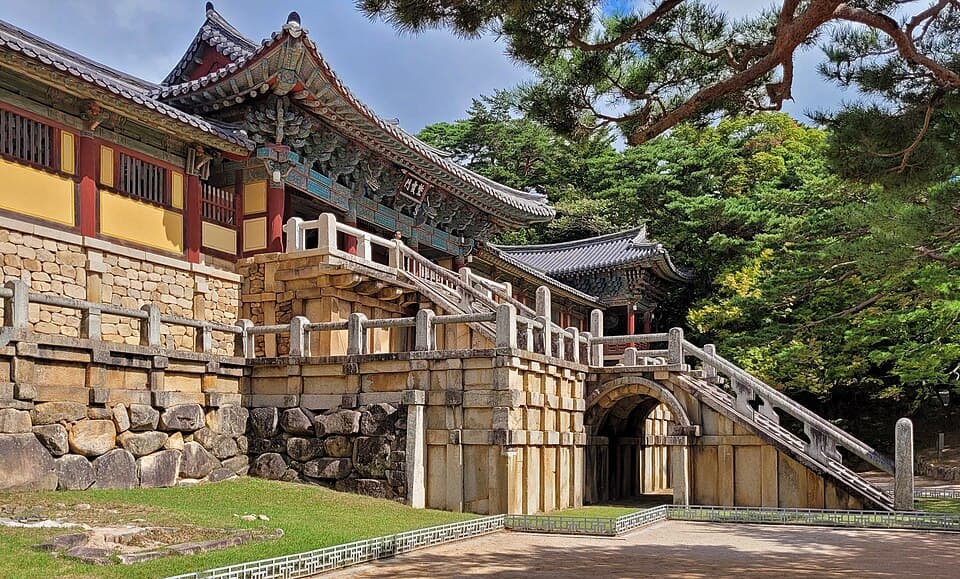
Gyeongju — City of the Ancient Kings
The capital of the Silla Kingdom for nearly a millennium — where kings emerged from eggs, golden crowns mirrored the World Tree, and royal tombs dot the landscape like sleeping giants
Gyeongju, North Gyeongsang Province; Busan (55 mi), South Korea
 Wikimedia Commons
Korean ShamanicLiving tradition
Jirisan — Sacred Mountain of Wisdom
The largest mountain massif in mainland South Korea — a sacred peak revered in shamanism, Buddhism, and Daoist tradition as a place where the foolish become wise
Namwon, North Jeolla Province; Hadong, South Gyeongsang Province, South Korea