 Wikimedia Commons
CultureSouth Asia
Indus Valley Civilization
The Bronze Age civilization of the Indus and Ghaggar-Hakra river systems — Mohenjo-daro, Harappa, Dholavira — whose script remains undeciphered.
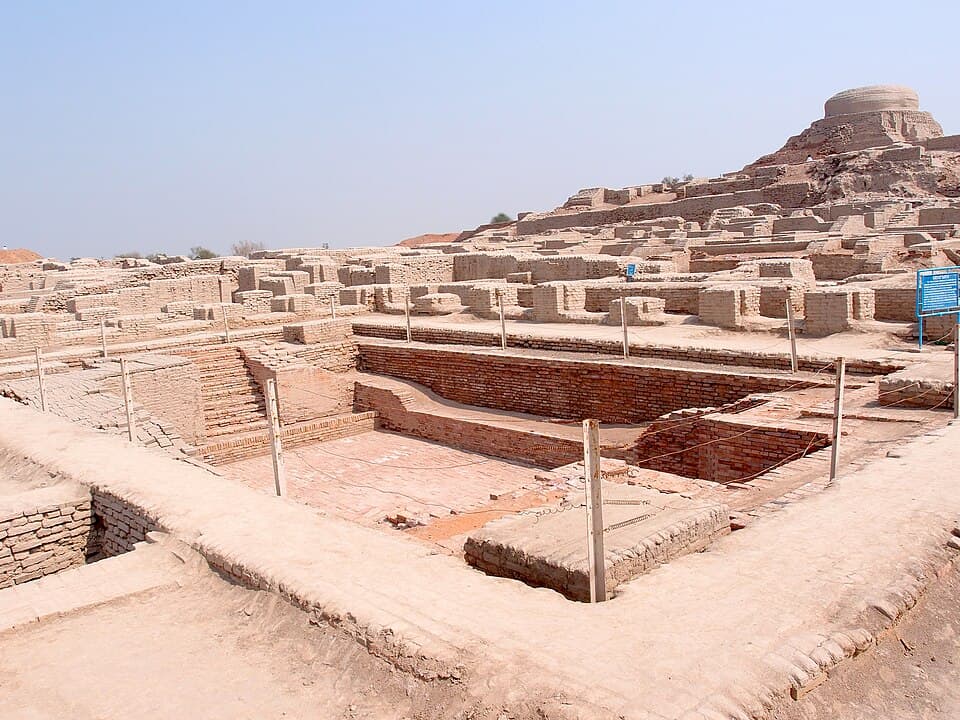
The Indus Valley Civilization (c. 3300–1300 BCE) was the largest of the four contemporaneous Bronze Age urban civilizations, alongside Egypt, Mesopotamia, and China. At its peak, it spanned roughly 1.25 million square kilometers across modern Pakistan and northwestern India, with planned cities, standardized weights and measures, sewered streets, and a writing system that has resisted every attempt at decipherment for more than a century. The civilization left no monumental palaces, no royal tombs, and no clearly identifiable rulers — features that have led some archaeologists to propose an unusually egalitarian or theocratic-administrative structure. Whatever its political form, the Indus cities were among the most carefully engineered urban environments of the ancient world: grid streets, baked-brick architecture, residential plumbing, and the famous Great Bath at Mohenjo-daro. The civilization declined gradually between 1900 and 1300 BCE, likely from a combination of climate shift and tectonic disruption to the river systems that fed it. Modern Mehrgarh, also in this catalog, was the long Neolithic precursor that fed the Indus rise.
1 entry mapped