 Wikimedia Commons
Itinerary · Ireland
Celtic Ireland: Tombs & High Kings
Neolithic passage tombs, fairy forts, and the giants of Ulster
4 stops · 5-7 days · ~400 km
Ireland's mythic landscape is stacked — Neolithic astronomy beneath Bronze Age burials beneath Iron Age kingship sites beneath Christian monasteries. The Tuatha De Danann, the Fianna, and the Ulster Cycle heroes all have addresses here. This compact route through the Boyne Valley and the northeast coast connects 5,000 years of sacred geography within a few hours' drive.
Trail Map
Route Timeline

County Meath, Ireland
The ceremonial seat of the High Kings of Ireland — where the Lia Fáil (Stone of Destiny) screamed beneath the rightful king
“Start at the Hill of Tara in County Meath — the inauguration site of Ireland's High Kings. The Lia Fail (Stone of Destiny) still stands on the summit. The views reach across five counties. The site is deceptively modest — a few grassy mounds — but the mythic weight is enormous.”

County Meath, Ireland
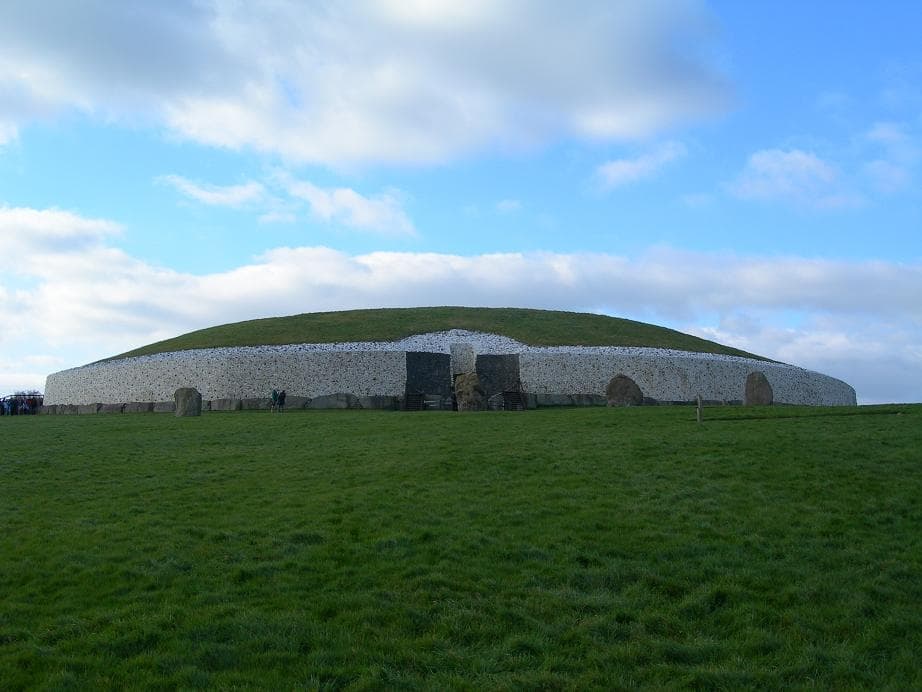
A 5,200-year-old passage tomb in Ireland's Boyne Valley — older than the pyramids, aligned to the winter solstice sunrise, and claimed as the dwelling of the god Dagda
“East to Newgrange, the 5,200-year-old passage tomb that predates Stonehenge and the pyramids. The winter solstice illumination of the inner chamber is the oldest known astronomical alignment in the world. Tours enter the passage — the corbelled ceiling inside is remarkable. Book through the Bru na Boinne visitor centre.”

County Meath, Ireland
The sacred bend of the River Boyne containing the greatest concentration of megalithic art in Europe — Newgrange, Knowth, and Dowth
“Explore the wider Bru na Boinne complex — the Bend of the Boyne. Knowth and Dowth are the sister tombs flanking Newgrange. Knowth has the greatest concentration of megalithic art in Western Europe. The river valley was the sacred heartland of Neolithic Ireland.”

County Antrim, United Kingdom
The extraordinary basalt columns of the Antrim coast — built by the giant Fionn mac Cumhaill to walk to Scotland and challenge a rival
“North to the Giant's Causeway on the Antrim coast — 40,000 interlocking basalt columns that Fionn mac Cumhaill built as a bridge to fight the Scottish giant Benandonner. Walk the coastal path and look across the sea to Staffa in Scotland, where the same geological formation continues the story.”
See all 4 stops plotted on the interactive map.
View these sites on the map