 Wikimedia Commons
Nazca — c. 500 BCE to 500 CERock Art SiteUNESCO World HeritageMythology
Nazca LinesNazca Mythology
Massive geoglyphs etched into Peru's desert — hummingbird, spider, whale, and condor — ritual pathways and astronomical markers spanning hundreds of meters.
The Myth
The Nazca Lines depict animals central to Nazca spiritual life — the condor (spanning 130 meters), the hummingbird (96 meters), the spider (46 meters), the monkey, the whale — alongside geometric trapezoids and spirals covering hundreds of meters. Each figure held cosmological significance: the condor connected the earthly and celestial realms, the spider was associated with rain and fertility, the hummingbird with pollination and renewal.
Scholars have proposed several complementary functions. Many of the lines served as ritual pathways (ceques) — procession routes walked during ceremonies, connecting sacred points across the landscape. The figures did not need to be seen from above to serve their purpose; they were created through walking. Maria Reiche, the German-born researcher who devoted 50 years to mapping the lines, demonstrated that many align with solstice sunrise and sunset positions, suggesting an astronomical calendar function. More recent research by David Johnson and others has proposed connections to underground water sources (puquios), linking the lines to the Nazca irrigation system.
The creation process — removing oxidized surface stones to expose lighter soil beneath — was technically straightforward but required careful planning and coordinated labor at massive scale, reflecting the organizational sophistication of Nazca society.
Want more like this?
The Weekly Myth hasn't started yet: one sacred site a week, its myth and its history. Leave your email and we'll write when the first one goes out.
We'll only use your email for the Weekly Myth. Unsubscribe anytime.
Themes
The Place
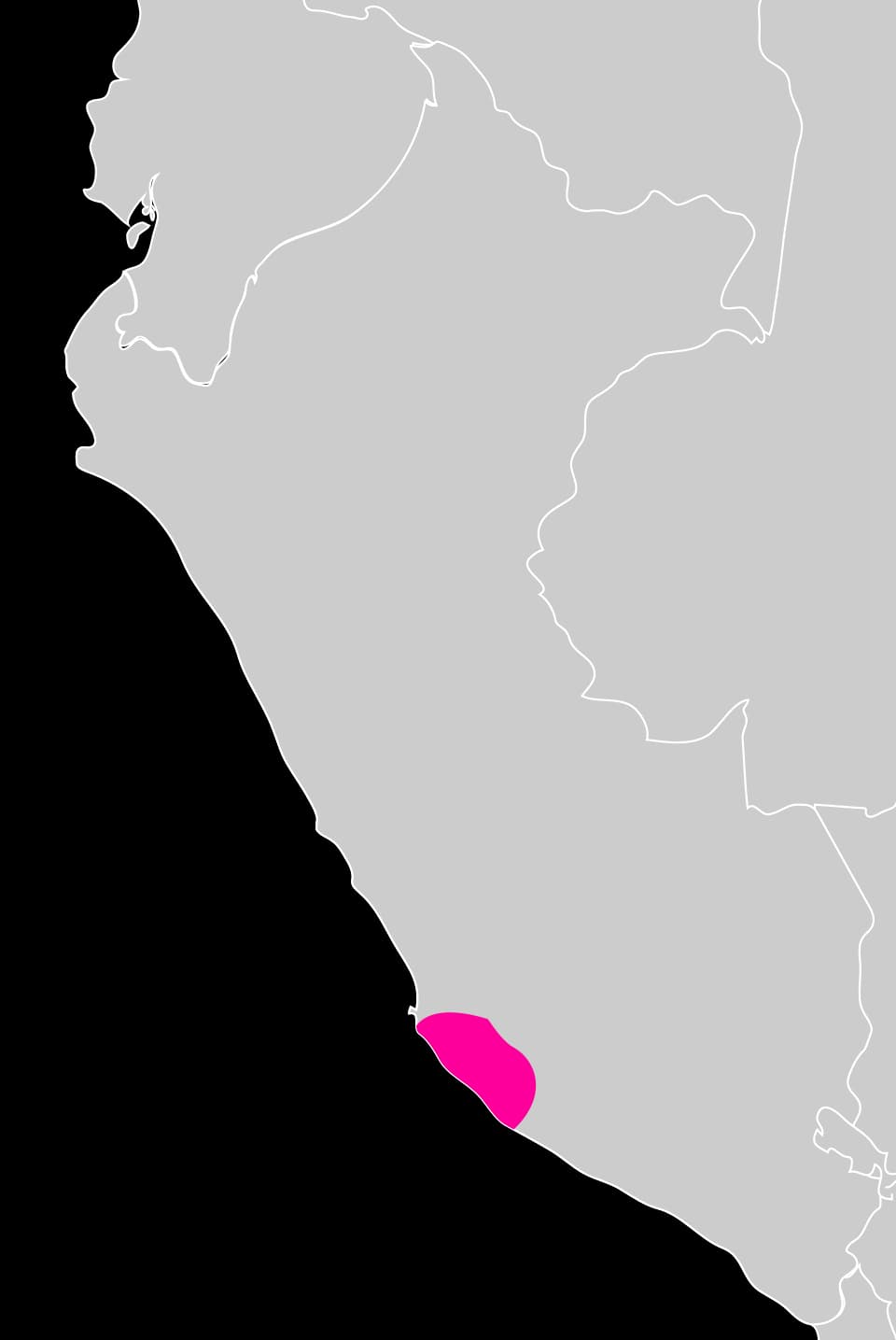
The Nazca Lines sprawl across the Nazca Plateau (Pampa Colorada), a high desert plain in southern Peru at roughly 500 meters elevation. The plateau is extraordinarily arid, with virtually no rainfall, allowing the lines to persist for over two millennia. The geological layer consists of reddish pebbles (desert varnish) overlying lighter-colored ground — removing the pebbles reveals the contrasting ground beneath, creating the effect of carved lines.
The depicted animals are enormous — the condor spans 130 meters, the hummingbird 96 meters, the spider 46 meters. Geometric shapes (trapezoids, spirals, rectangles) cover hundreds of meters. Lines radiate from hilltops, creating a network visible only from altitude. The site is so vast that the individual figures cannot be distinguished from ground level — one walks along a 'line' without perceiving its purpose.
A modern tower at Mirador offers a vantage point to view some figures; viewing from aircraft is also possible. The Nazca Museum and Maria Reiche Center provide context and artifact displays.
The History
The Nazca Lines were created roughly between 500 BCE and 500 CE by the Nazca culture (or possibly by their predecessors, the Paracas culture). The creation process was relatively simple: removal of desert varnish (a oxidized dark surface coating) to expose lighter soil beneath. Yet the labor was enormous — each line required careful measurement and coordination to maintain width and direction across uneven terrain.
The purpose remains contested. Some scholars propose astronomical calendration — the lines align to solstices, rising and setting stars, or planetary positions. Others suggest ritual pathways (ceques) for processions or offerings. Still others propose shamanic vision sites where the geoglyphs served as focus points for altered consciousness.
Maria Reiche (1903-1998), a German mathematician and archaeologist, began studying the lines in 1940 and spent 50 years mapping, photographing, and protecting them. Her work brought international attention and established the astronomical hypothesis. Modern researchers use satellite imagery, drone photography, and geophysical surveys to investigate questions Reiche could only ponder.
The lines were threatened by looting, vandalism, and development until they were designated a UNESCO World Heritage Site (1994) and protected under Peruvian law.
Frequently Asked
Massive geoglyphs etched into Peru's desert — hummingbird, spider, condor, whale — ritual pathways and astronomical markers of the Nazca culture.
Sources
Reiche, Maria. Mystery on the Desert: A Study of the Ancient Geoglyphs of Nasca, Peru (1968). Universidad Nacional de San Cristóbal de Huamanga. The lifetime study of the Nazca Lines by the foremost researcher
Tier 1Proulx, Donald A.. The Nazca Culture (2006). Blackwell Publishing. Comprehensive study of Nazca culture including the geoglyphs and their purpose
Tier 2Related Entries
Tassili n'Ajjer — Rock Art of the Spirits
A vast sandstone plateau in the Sahara preserving over 15,000 rock paintings spanning 10,000 years — depicting human figures, cattle, wildlife, and scenes interpreted as ritual or shamanic practice
Illizi Province, Algeria
Kakadu — Serpent Dreaming
A vast wilderness in tropical Australia containing rock art spanning 20,000 years — where the Rainbow Serpent created the landscape and still sleeps beneath the billabongs
Northern Territory, Australia
Ahu Tongariki & the Moai — Rapa Nui
Monumental stone ancestors carved by the Rapa Nui people — 887 moai statues representing deified ancestors, with Ahu Tongariki the largest restored platform
Valparaíso Region, Chile
Mythic Grounds acknowledges that many sites documented here are sacred to Indigenous peoples and living cultural communities. We strive to present information respectfully, drawing only from published and authorized sources. If you are a member of a community represented on this site and believe any content is inaccurate or culturally inappropriate, please contact us.