 Wikimedia Commons
Creation time — the origin of the world and the Yoruba peopleSacred CityLiving tradition
Ile-Ife — Sacred City of CreationYoruba & West African Mythology
The holy city where the Yoruba believe the world was created — where Oduduwa descended from heaven on a chain and scattered sand upon the primordial waters
Images via Wikimedia Commons
The Myth
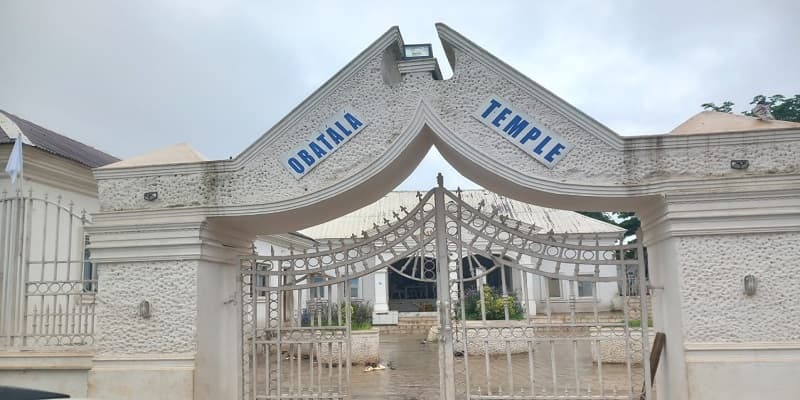
In Yoruba cosmology, Ile-Ife is the place where the world began. The supreme god Olodumare sent Oduduwa (or in some versions, Obatala) down from heaven on a chain, carrying a calabash of sand, a five-toed chicken, and a palm nut. Oduduwa poured the sand upon the primordial waters and set the chicken upon it. The chicken scratched and scattered the sand in all directions, creating the dry land. The palm nut grew into a tree with sixteen branches, representing the original sixteen kingdoms of the Yoruba people.
Ile-Ife means 'the place of spreading' — the point from which all land spread outward. The city is not merely historically important; it is cosmologically central. All Yoruba trace their origin to Ile-Ife, and the Ooni (king) of Ife is regarded as the spiritual father of all Yoruba people worldwide.
The mythology of Ile-Ife also includes the story of how Oduduwa's descendants spread out to found the great Yoruba city-states — Oyo, Benin, Ketu, and others. Each ruling dynasty traces its lineage back to Ile-Ife, making the city the root of a civilization that today encompasses over 40 million people in Nigeria alone, plus millions more in the diaspora.
Want more like this?
The Weekly Myth hasn't started yet: one sacred site a week, its myth and its history. Leave your email and we'll write when the first one goes out.
We'll only use your email for the Weekly Myth. Unsubscribe anytime.
Themes
The Place
Ile-Ife is a city of roughly 500,000 people in Osun State, southwestern Nigeria, approximately 130 miles northeast of Lagos. The modern city surrounds the historic core, where sacred groves, shrines, and the palace of the Ooni preserve the city's spiritual identity.
The Ife Museum (officially the Museum of Ife Antiquities) houses the extraordinary bronze and terracotta heads for which Ife is world-famous — naturalistic portrait sculptures dating to the 12th-15th centuries CE that astonished European scholars when first seen, challenging racist assumptions about African artistic capability. Obafemi Awolowo University, one of Nigeria's most prestigious institutions, is located in Ile-Ife.
The History
Archaeological evidence confirms that Ile-Ife was a major urban center from at least the 9th century CE, with roots stretching back further. The naturalistic bronze and terracotta sculptures, produced between the 12th and 15th centuries using the lost-wax casting technique, represent one of the highest achievements of African art. When the German ethnologist Leo Frobenius first saw them in 1910, he refused to believe they were African and attributed them to the lost civilization of Atlantis — a racist interpretation long since discredited.
Excavations by Frank Willett and others from the 1950s onward revealed the extent of medieval Ife — a sophisticated urban civilization with elaborate art, complex social organization, and extensive trade networks. The relationship between the mythological creation narrative and the archaeological evidence suggests that Ile-Ife was indeed a 'mother city' from which Yoruba civilization spread, lending the origin myth a historical core.
Mythological Connections
Osun-Osogbo Sacred Grove
Ile-Ife to Osun-Osogbo — Yoruba sacred heartland
Ouidah — Voodoo Spiritual Center
Ouidah to Ile-Ife — Vodun and Orisha traditions
Mount Olympus
Ile-Ife to Olympus — divine pantheon structures
Frequently Asked
The holy city where the Yoruba believe the world was created — where Oduduwa descended from heaven and scattered sand upon the waters to create dry land.
Sources
Willett, Frank. Ife in the History of West African Sculpture (1967). Thames & Hudson. Foundational study of Ife art and its archaeological context
Tier 2Johnson, Samuel. The History of the Yorubas (1921). Routledge. View source → Landmark history by a Yoruba clergyman, preserving oral traditions of Yoruba origin and the role of Ile-Ife
Tier 1Related Entries
Ouidah — Voodoo Spiritual Center
The Beninese coastal town that is the spiritual capital of West African Vodun — where the Python Temple houses living sacred serpents and the Door of No Return marks the final passage of enslaved people to the ships
Atlantique Department, Benin
Mount Olympus
The highest peak in Greece and the mythological seat of the twelve Olympian gods — where Zeus held court above the clouds
Pieria / Thessaly, Greece
Lake Bosumtwi — Sacred Lake of the Ashanti
The meteorite crater lake in Ghana where the Ashanti believe the souls of the dead come to bid farewell to the god Twi — and where only wooden planks, not boats, may touch the water
Ashanti Region, Ghana
Uruk — City of Gilgamesh
The world's first great city and the setting of the oldest story ever written — where Gilgamesh built his walls and sought immortality
Muthanna Governorate, Iraq
Mythic Grounds acknowledges that many sites documented here are sacred to Indigenous peoples and living cultural communities. We strive to present information respectfully, drawing only from published and authorized sources. If you are a member of a community represented on this site and believe any content is inaccurate or culturally inappropriate, please contact us.