 Wikimedia Commons
CultureMicronesia / PacificLiving tradition
Pohnpeian
The people of Pohnpei in the Federated States of Micronesia — inheritors of the Saudeleur dynasty and keepers of the oral history of Nan Madol.
Pohnpei is a high volcanic island in the eastern Caroline Islands, the largest in the Federated States of Micronesia. Its people speak Pohnpeian, an Austronesian language, and organize society around a complex, living system of chiefly titles, clan lineages, and the ceremonial culture of sakau (kava) — a system whose roots reach back to the island's first great political order, the Saudeleur dynasty.
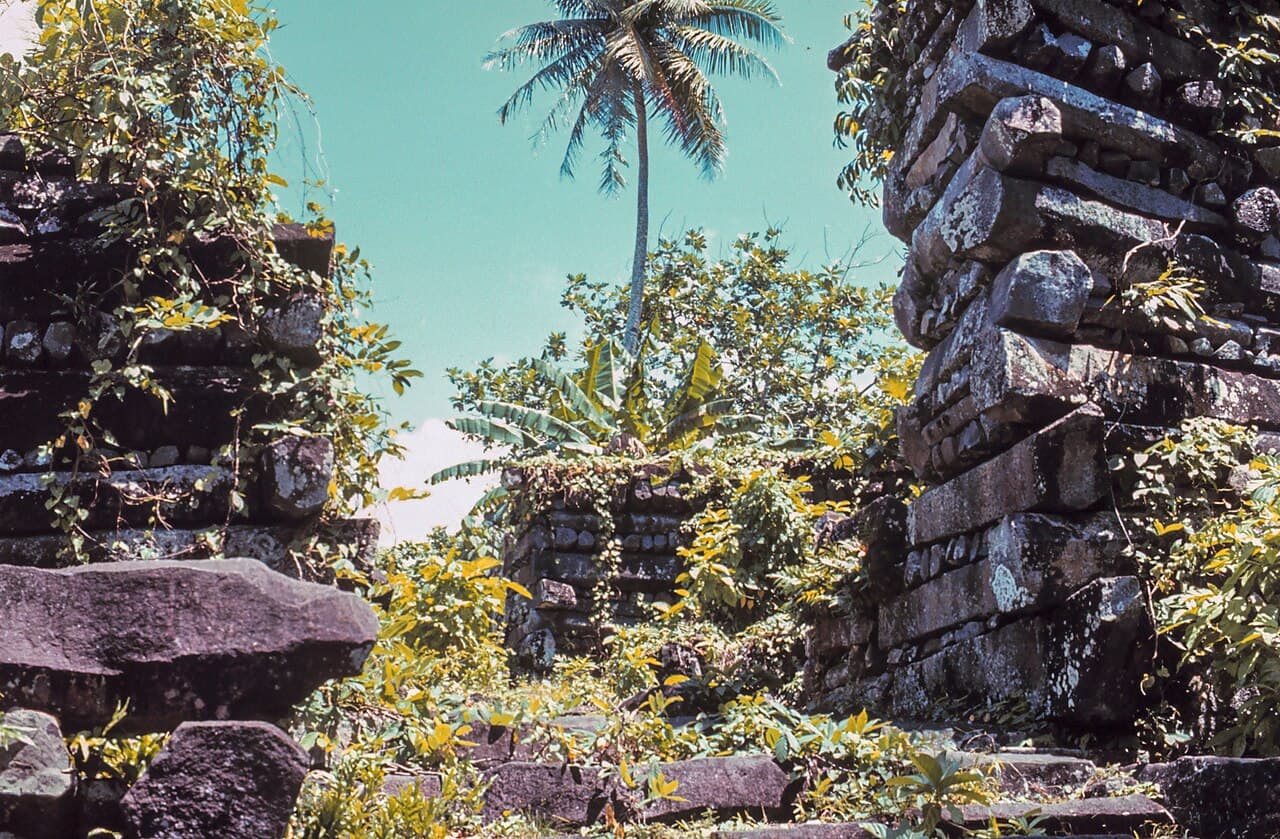
The Saudeleur unified Pohnpei from their seat at Nan Madol, a city of nearly a hundred artificial islets built on the reef flat off the island's southeast coast, sometime around the 12th–13th centuries CE. For Pohnpeians, Nan Madol is not a dead ruin but the heart of the island's founding history — the place where centralized rule, ritual, and the relationship between chiefs and the spirit world were first established. Pohnpeian oral tradition recounts the dynasty's origins, its long rule, its eventual tyranny, and its overthrow by the culture-hero Isokelekel, whose arrival ended the Saudeleur and established the system of paramount chiefs (Nahnmwarki) that endures on Pohnpei today.
Pohnpeian cosmology is woven into the landscape — eels, spirits, and ancestral beings inhabit specific reefs, pools, and stones, and certain sites at Nan Madol are still regarded as spiritually charged and approached with caution. Knowledge of the deeper traditions tied to particular places is held by title-holders and elders and is not all freely shared with outsiders. The directory presents only what Pohnpeian custodians and published accounts have made public, and defers to local custom on access.
Low-lying parts of the Federated States face an existential threat from sea-level rise; Nan Madol's seaward structures are already affected by rising water, mangrove encroachment, and storm damage.
1 entry mapped