 Wikimedia Commons
CultureWestern EuropeRevived tradition
Celtic / Irish
The mythology of the Celtic peoples — the Tuatha Dé Danann, the Fenian Cycle, and the sacred landscapes of Ireland and Britain.
Celtic mythology survives primarily through medieval Irish and Welsh manuscripts preserving much older oral traditions. The Irish mythological cycles — the Mythological Cycle of the Tuatha Dé Danann, the Ulster Cycle of Cú Chulainn, the Fenian Cycle of Fionn mac Cumhaill, and the Cycles of the Kings — describe a world where the boundary between the mortal realm and the Otherworld (Tír na nÓg) is permeable, especially at liminal times like Samhain. The landscape of Ireland and Britain is densely mythologized: passage tombs older than the pyramids are attributed to the Tuatha Dé Danann, holy wells mark encounters with the divine, and stone circles encode astronomical knowledge. The Celtic tradition influenced Arthurian legend, Halloween, and the broader European fairy tradition.
5 entries mapped
 Wikimedia Commons
Celtic / IrishUNESCO
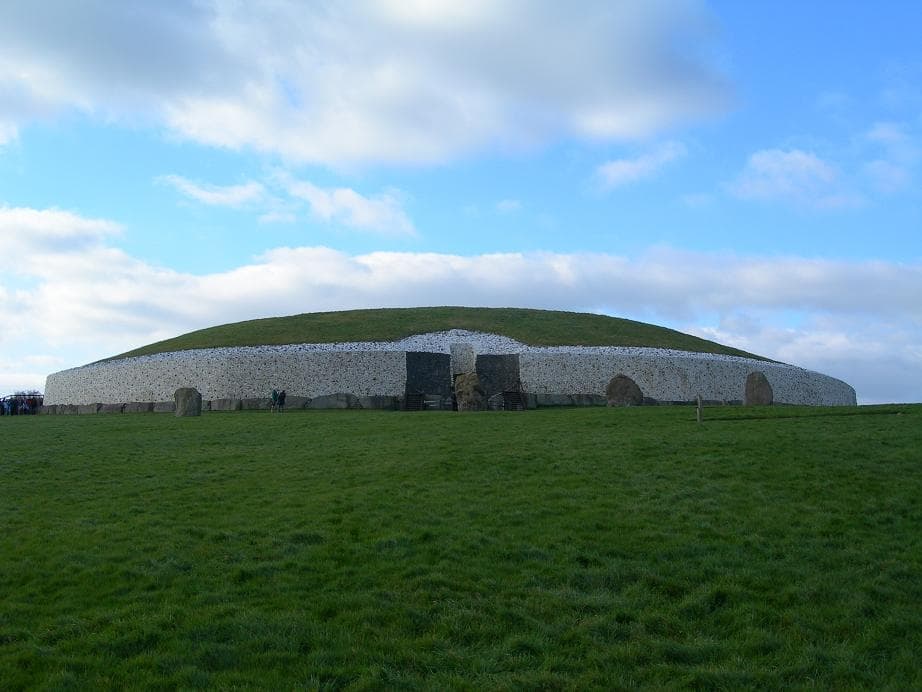
Newgrange — Passage Tomb of the Tuatha Dé Danann
A 5,200-year-old passage tomb in Ireland's Boyne Valley — older than the pyramids, aligned to the winter solstice sunrise, and claimed as the dwelling of the god Dagda
Drogheda, County Louth (5 mi); Dublin (30 mi), Ireland
 Wikimedia Commons
Celtic / Irish
Hill of Tara — Seat of the High Kings
The ceremonial seat of the High Kings of Ireland — where the Lia Fáil (Stone of Destiny) screamed beneath the rightful king
Navan, County Meath (7 mi); Dublin (25 mi), Ireland
 Wikimedia Commons
Celtic / IrishUNESCO
Giant's Causeway — Fionn mac Cumhaill's Bridge
The extraordinary basalt columns of the Antrim coast — built by the giant Fionn mac Cumhaill to walk to Scotland and challenge a rival
Bushmills, County Antrim (2 mi); Belfast (60 mi), United Kingdom
 Wikimedia Commons
Celtic / Irish
Glastonbury Tor — Isle of Avalon
The conical hill rising from the Somerset Levels — long identified as the Isle of Avalon, where King Arthur was carried after his final battle
Glastonbury, Somerset; Bristol (25 mi), United Kingdom
 Wikimedia Commons
Celtic / IrishUNESCO
Brú na Bóinne — Valley of the Boyne
The sacred bend of the River Boyne containing the greatest concentration of megalithic art in Europe — Newgrange, Knowth, and Dowth
Drogheda, County Louth (5 mi); Dublin (30 mi), Ireland